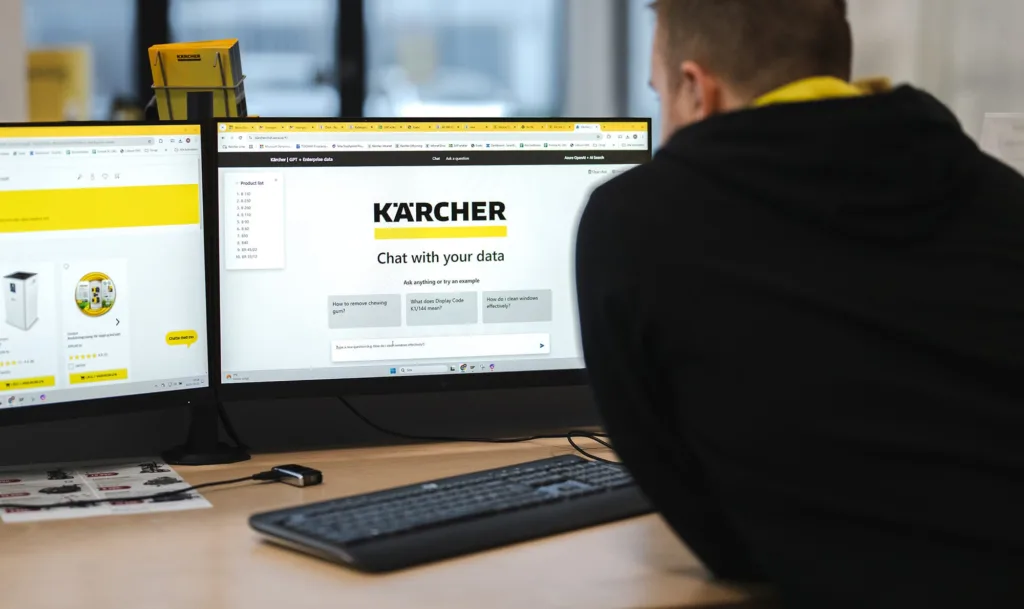
An email arrives at customer service. Within seconds, an AI agent has read the email, found the customer number, looked up the order, and written a reply. The customer doesn’t have to wait. The company has just paid for a chain of model calls that will soon be repeated thousands of times.
At Aixia, we’re seeing this shift among companies that have moved beyond the AI pilot phase. They’ve identified workflows that work and want to deploy them more widely. As services built on Claude or the models behind ChatGPT have to handle more users, larger data sets, and longer chains of tasks, the cost also increases. A per-call price that seems insignificant in a test environment can set the limit on how many cases a company can afford to automate. Gartner estimates that the cost of running models per agent workflow could increase more than fivefold by 2028, even as the base models become more efficient. Agents simply perform more steps on the path to a final result.
Gartner sees open models in nine out of ten steps
Gartner estimates that 90 percent of the steps in companies’ operational agent workflows will be run on models with open weights by 2030. According to analysts, open models are already capable of handling many routine tasks with comparable quality. Think of classification, information extraction, and calls to business systems.
In the best-case scenario, the modeling cost can be as low as one-twentieth of the cost of using one of the most advanced models—a frontier model—at each step. When longer response times and more retries are factored in, analysts’ more conservative estimate is about one-fifth to one-sixth per task. The outcome depends on the workflow and the comparison model.
Go back to the customer’s email. A basic model can determine what the inquiry is about and extract the order number. A standard integration can check the delivery status. If the delivery notification contradicts what the customer was previously told, a more powerful model can help sort out the details, or the matter can be escalated to a customer service representative. The company then pays for the advanced model only in cases where it is actually needed. Researchers from NVIDIA and Georgia Tech argue for this distinction: many agent calls involve a clearly defined task where smaller language models are sufficient, while larger models can handle the steps that require broader reasoning.
At Aixia, we have been working with open models as a foundation for several years and have built AI infrastructure for Nordic clients. We test how different models handle the client’s data, such as Swedish technical terms, document formats, and calls to internal systems. In production, it also matters how quickly the model responds under load, how often it needs to retry, and when it should hand off to a human. It is precisely this type of quality and cost measurement that an MLOps platform makes it possible to track over time.
From the Desktop to an AI Cloud
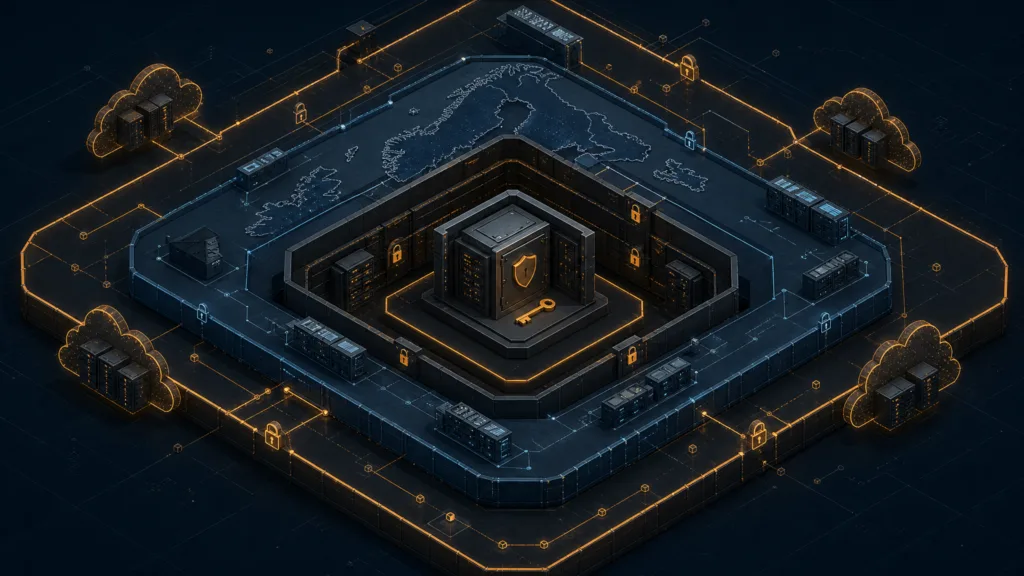
By “open models,” we mean models whose weights are available for independent use. The license governs how they may be used. When a model can be run in multiple environments, the company has greater control over where data is processed, who operates the infrastructure, and how capacity is expanded.
A smaller model may be suitable for a workstation used for development or working with local documents. An on-premises data center may be the right choice for a shared service that needs to be close to internal systems and data. A specialized AI cloud can provide fast access to GPUs for testing, production, or temporary spikes in workload. The same company can use all three environments and choose the location based on the workflow. This also allows for switching operating environments as needs change. A team can start on a workstation, test the model against a larger dataset in the cloud, and then deploy it in their own data center. To make that transition, they also need to plan for how agents will access their tools, how access is controlled, and how results are tracked.
| Environment | Suitable for | Typical reasons |
|---|---|---|
| Workstation | Development, local documents | Rapid iteration; data never leaves the computer |
| In-house data center | Shared service in operation | Close to internal systems and data |
| AI Cloud | Testing, Production, Peak Loads | Fast access to GPUs, scalable capacity |
evroc for European control over AI operations. Stockholm-based evroc is building a European cloud for organizations that have high requirements for security and control over data, platforms, and software. They offer AI services, virtual machines with GPUs, and GPU clusters. For a company that wants to run open models in the cloud with data stored in Europe, this provides an alternative to in-house operations. Through Build Nordic’s AI , Aixia is collaborating with evroc and Opper on scalable AI infrastructure with a Nordic foundation. We help customers translate requirements for data location, access, and operations into a solution and determine which workflows are suitable for that environment.
Nebius for rapid testing and scaling up. Nebius is headquartered in Amsterdam and builds cloud infrastructure for AI, from training and fine-tuning to running models in production. The platform combines large-scale GPU clusters with tools for development and operations. Through our partnership with Nebius, we can tailor capacity to the customer’s volume, response times, and requirements regarding where data is processed. With Nebius Token Factory, a team can test open models via API and compare them with the model already in use in their workflow. As the service gains more users, dedicated options for reserved capacity and more predictable response times become available.
Calculate the cost of a resolved case
If the cheapest model requires multiple attempts and a case handler still has to correct the answer, it can end up being expensive in practice. Therefore, calculate the cost per correctly completed task. Include model calls, rented or in-house capacity, integration, operations, and human review. For sporadic use, an API may offer the best value. When the same steps are run all day long, in-house or dedicated capacity may be more cost-effective.
Start with a workflow that already has volume and where you can evaluate the results. That way, you can measure how much work an open model can handle, which exceptions require a more robust model, and what it would cost to scale up. In customer service, such a test can be based on a set of past cases. Have the models process the same data and compare how often they identify the correct order, accurately report the delivery status, and forward cases that require human assessment. Then run the calculation based on the volume you actually expect. This provides a better picture of how costs will change as the pilot expands from a single team to the entire organization.
Would you like to know how much you can save with open models and where they should be run? Contact Aixia. We’ve been working with AI for over ten years and offer one of Sweden’s most comprehensive sets of expertise in AI infrastructure, GPU clusters and DGX SuperPOD, model selection, and practical application. Bring us a real-world workflow, and we’ll help you compare quality, performance, and cost before you scale up.
Sources and Further Reading
- Gartner, August 17, 2026: AI Inference Costs Per Agentic Workflow Will Increase More Than Fivefold Through 2028.
- Gartner, October 26, 2026: Tech FutureSight: Open-Weight Models Will Run 90% of Enterprise Agentic Workflow Steps (public abstract).
- The Register, November 3, 2026: Open models can perform 90% of agentic work at one-twentieth the cost of a state-of-the-art LLM.
- NVIDIA Research and Georgia Tech: Small Language Models Are the Future of Agentic AI (arXiv:2506.02153), as well as NVIDIA’s technical overview.
- Aixia: aixia.se, along with Aixia, evroc, and Opper, are launching a Nordic AI initiative for digital sovereignty.
- evroc: AI services and about evroc.
- Nebius: About and Token Factory.
- Aixia Innovation Day: Nebius as a Silver Partner.