For enterprise organizations, the choice of platform is no longer just about technology, but about strategic decisions that affect everything from future costs to data sovereignty and the pace of innovation.
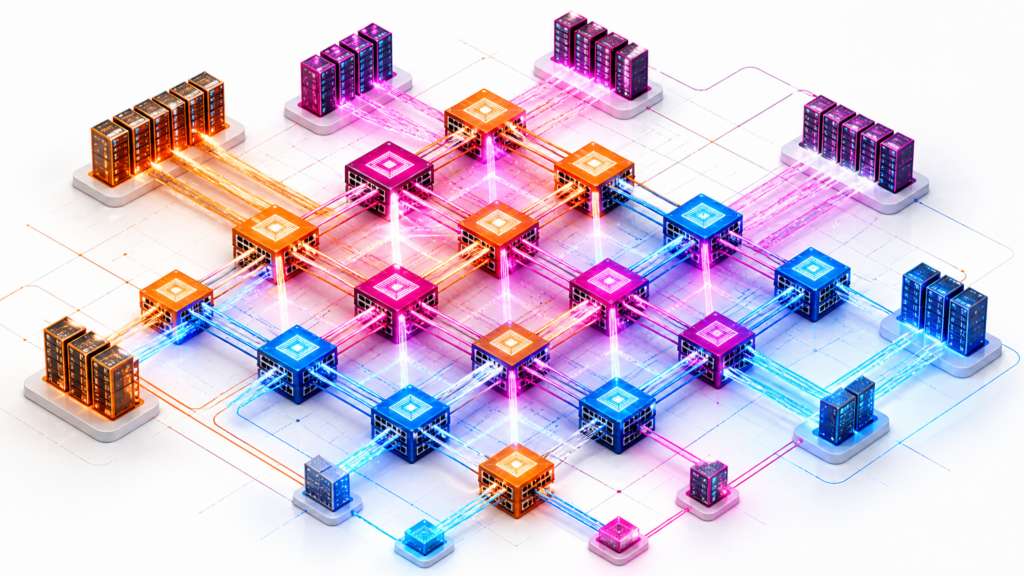
The AI infrastructure market is in a state of intense competition, with three dominant ecosystems staking out their respective territories. By analyzing the strengths of NVIDIA, Google and Microsoft, it is possible to identify where the biggest gains – and risks – lie for Swedish companies.
NVIDIA: The technological engine
NVIDIA has cemented its position as the undisputed leader in hardware, but its real strength lies in the combination of computing power and software stack. With libraries like CUDA and optimization tools like TensorRT, they have created an environment where the hardware is utilized to the maximum.
For organizations that prioritize raw performance, low latency, and the ability to run complex loads both on-premises and in the cloud, the NVIDIA ecosystem is the gold standard. It’s an infrastructure built for performance at every stage, from single GPUs to large-scale clusters.
Google: Engineering focus and MLOps
Google has taken an approach that puts the developer and the data science team at the center. Through Vertex AI, they have created a cohesive platform that simplifies the entire lifecycle of an AI model – from training to deployment.
Google’s strength lies in their long experience in large-scale data management and tools that feel seamless to technical teams. The ecosystem is optimized for those who want high automation and access to advanced cloud-based development tools.
for Microsoft: enterprise integration
Microsoft is gaining ground through deep integration into existing enterprise environments. For an organization that already lives in the Azure ecosystem, the step to their AI services is natural. By partnering with OpenAI, they have made advanced models easily accessible to the business side.
The focus is on enterprise readiness – being able to quickly scale up AI solutions within existing contracts and security procedures.
The risk: Lock-in
Despite the benefits, there is an inherent risk that is rarely highlighted: the lock-in effect. When a business migrates its entire AI production to a specific cloud platform, it becomes bound to that provider’s pricing models, legal terms and technical limitations.
Moving complex models and data between, for example, Google Vertex AI and Microsoft Azure is resource-intensive and can hamper agility.
The solution: Independence
In this landscape, Aixia stands out as an independent party. With no connection to a specific cloud provider, the focus is on choosing the tools and infrastructure that best serve the customer’s specific needs.
This could mean an on-premises NVIDIA-based architecture to ensure full data sovereignty, or a hybrid solution where you get the best of the cloud giants without losing control of your own data.
The profit is in the freedom
The biggest win for the enterprise customer rarely lies in picking a single winner. Instead, it’s about maintaining architectural freedom.
By building a vendor-neutral strategy, companies can leverage NVIDIA’s performance and the cloud giants’ services, while maintaining control of their own data and models.
Navigating the ecosystem jungle requires an understanding that technology should serve business – not the other way around.
Contact Aixia for an objective analysis of your options based on your performance, security and sovereignty requirements.
Sources: NVIDIA vs Google | NVIDIA vs Microsoft
Aixia offers superior IT operations and AI infrastructure without vendor lock-in.