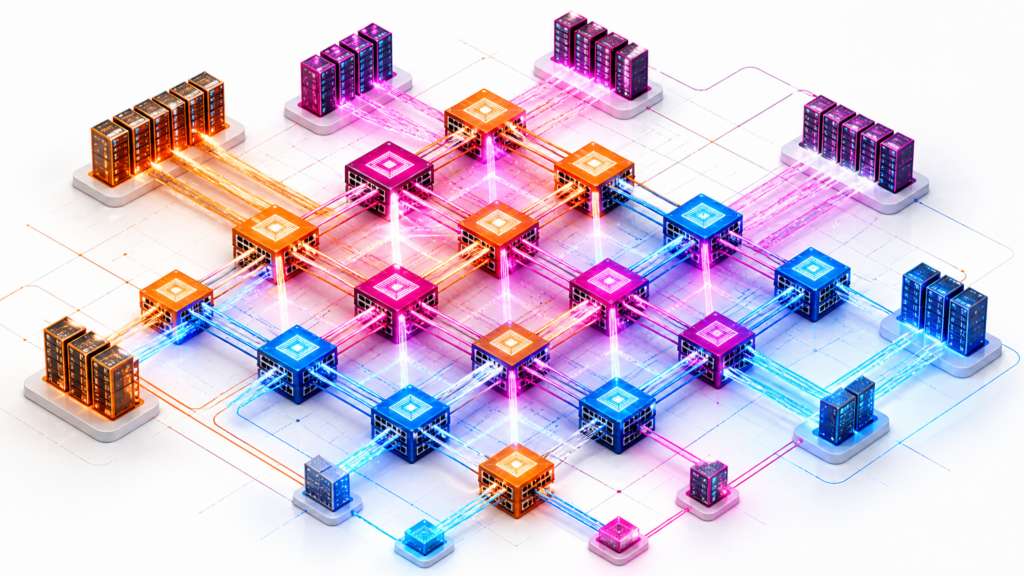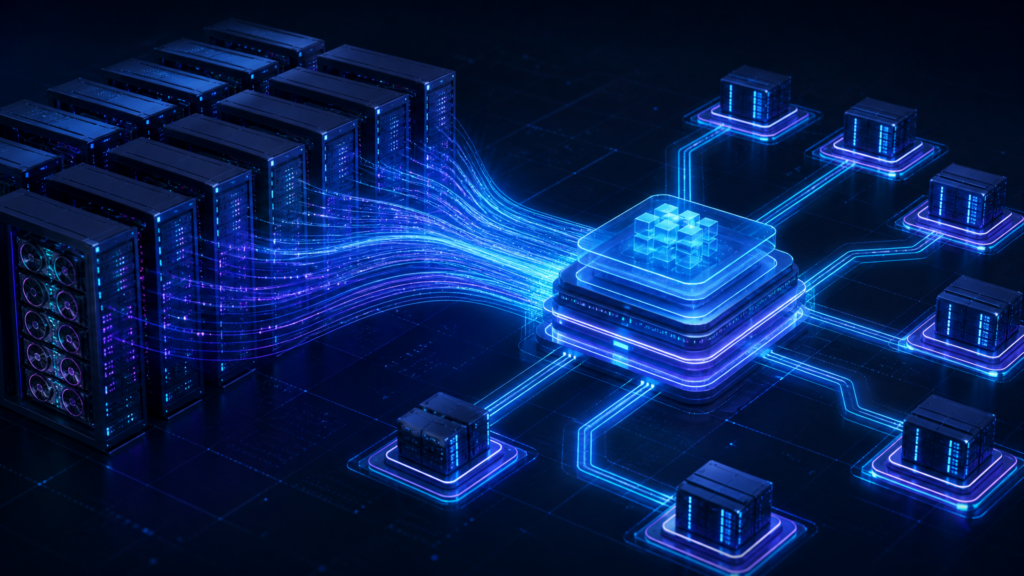
Within the IT industry, evolution never stands still and hyperconverged infrastructure (HCI) has quickly become a preferred route for companies striving to streamline and scale their IT resources. Nutanix, one of the prominent players in the HCI sector, has received significant recognition for its robust and innovative features. In this article, we at Aixia, will delve into the various aspects of Nutanix and highlight why we see it as a premier choice for hyperconverged infrastructure.
Core Architecture of Nutanix
Nutanix HCI is founded on a scalable and distributed architecture that amalgamates data storage, computation, and virtualization into a seamless platform. Central to this architecture is Nutanix Acropolis Hypervisor (AHV), a proprietary hypervisor optimized to offer performance, security, and simplicity. AHV is an integral part of Acropolis Operating System (AOS), which constitutes Nutanix’s software solution for managing and orchestrating HCI.
Centralized and Efficient Management
Nutanix provides users with a centralized management console, named Prism, which offers IT administrators a comprehensive overview and control over the HCI environment. Prism facilitates the monitoring and management of resources, performance, capacity, and availability, significantly reducing the complexity in administering the IT infrastructure and lowering operational costs.
Scalability and Performance
Nutanix HCI is designed to be easily scalable and to grow in line with the company’s needs. The platform can expand by adding more nodes, enabling a linear performance increase. This flexibility allows companies to tailor their IT infrastructure to needs and avoid over-provisioning and unnecessary costs.
Advanced Data Management and Protection
With Nutanix, users have access to advanced data management features such as deduplication, compression, and automatic tiering, which optimize storage space and improve performance. Nutanix also offers a myriad of data protection features like snapshots, cloning, and synchronous/asynchronous replication, ensuring high data availability and recovery in the event of disasters.
Integrated Security
Security is a fundamental aspect of Nutanix HCI. The platform includes several security features such as Micro-segmentation, Data-at-Rest encryption, and metadata backups. Additionally, Nutanix’s platform is certified according to various security standards like FIPS 140-2, GDPR, and HIPAA.
Support for Hybrid and Multicloud Environments
Nutanix HCI is designed to support hybrid and multicloud environments, providing companies the flexibility to utilize different cloud platforms as needed. Nutanix Beam and Nutanix Calm provide centralized solutions for cost and security management across different cloud providers, as well as automation and orchestration of applications across private and public clouds.
Conclusion
Nutanix’s hyperconverged infrastructure offers a set of features that provide companies performance, scalability, simplicity, and security. With its centralized management, advanced data handling and protection, support for hybrid and multicloud environments, and built-in security features, Nutanix is an excellent choice for companies wanting to modernize their IT infrastructure. That’s why Aixia recommends Nutanix as the best choice for hyperconverged infrastructure.