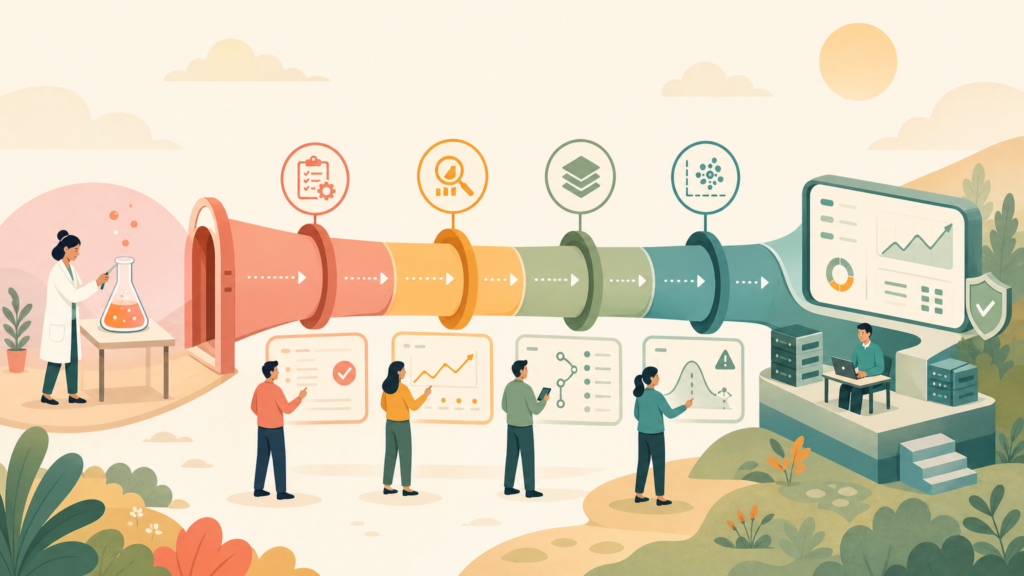
There’s a lot of talk about the grand visions of AI, but behind the scenes, everyday life often looks different. Pipelines that crash in the middle of the night, training costs that eat up the entire budget, and models that perform brilliantly in the lab but fall flat in production. Despite the toolbox being full of names like Kubeflow, MLflow and Airflow, we see many teams struggling with exactly the same problems. We’ve gathered the six most common bottlenecks from our real-world projects – and how we navigate past them using AiQu.
1. “It worked on my machine”
The classic dilemma. Data Scientists build great models in isolated environments, but when it comes to deploying them in production, there is friction. Environmental differences create bugs that are hopeless to track down.
– The solution in AiQu: By standardizing workspaces and container-based environments directly in AiQu, we ensure that the development environment is an exact mirror of the production environment. No more guesswork.
2. Silos between teams and resources
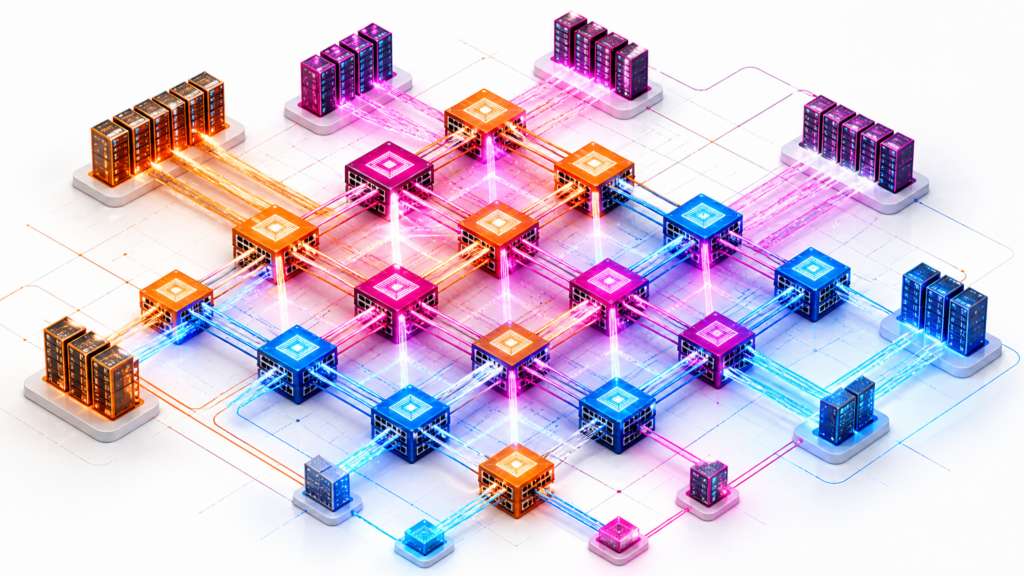
When different teams run their own initiatives, small islands of computing power are often created. A GPU sits unused on one team while another waits in line for hours.
– The AiQu solution: The platform acts as a central conductor. It breaks down silos by sharing resources dynamically based on priority. This means you get maximum value from every dollar invested in hardware.
3. scalability that breaks the budget
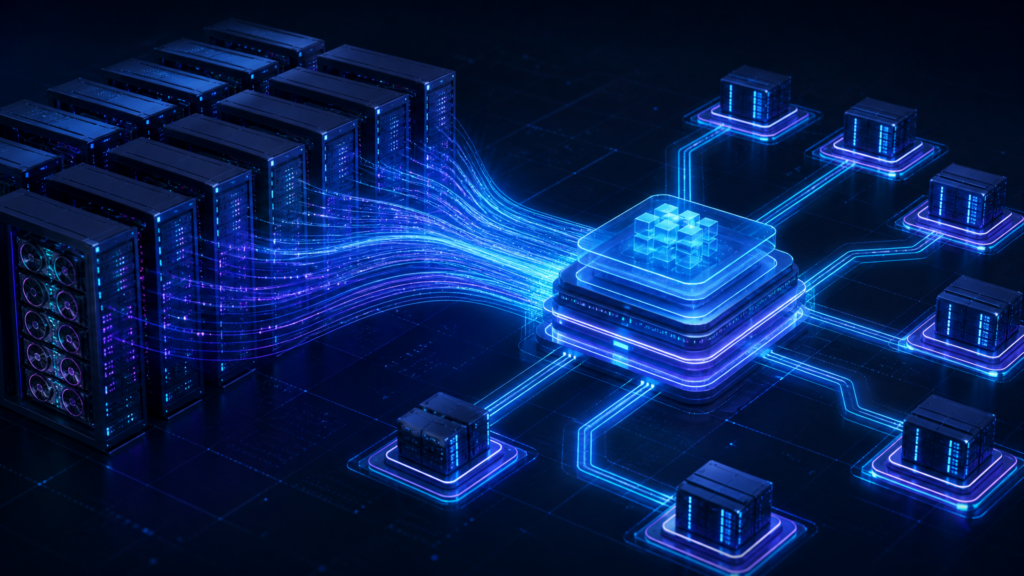
Scaling up a pilot to full production often means a linear increase in costs that few budgets can sustain. Without control over how resources are actually used, the bill quickly spirals out of control.
– The solution in AiQu: We have built in strict resource control and monitoring. You can set quotas, schedule jobs when the price of electricity is lower, or utilize spare capacity in a way that allows you to scale smartly, not just expensively.
4. Black boxes in production
Many models are rolled out without proper monitoring. When the data in the real world starts to change (data drift), the model loses its accuracy without anyone noticing until it is too late.
– The AiQu solution: The platform provides a single view of all workloads. You get alerts when something is out of line, allowing you to act proactively instead of putting out fires when business value has already started to decline.
5. Data sovereignty and security
As regulations tighten (think EU AI Act), sending sensitive data back and forth between different unprotected environments becomes untenable.
– The AiQu solution: Because AiQu is built with Sovereign AI in mind, you can run your entire pipeline locally or in a Swedish data center. You retain control of both data and encryption keys throughout the chain.
6. too complex tool chains
Stitching together five different open-source tools requires a whole team of engineers just to maintain the ‘plumbing’ itself. It takes time away from what actually creates value: AI development.
– The solution in AiQu: We’ve done the hard work for you. AiQu ties the best tools together in a coherent platform. It reduces the cognitive load on your teams and lets them focus on building models instead of fixing broken connections.
Takeaway for 2026
The road to successful AI is not about finding the most advanced model, but about building an infrastructure that does not stand in the way of innovation. At Aixia, we see that the companies that win are those that dare to look at their “AI plumbing” already now.
By using a platform like AiQu, you remove the friction and turn your MLOps from a bottleneck into a competitive advantage.
Do you recognize yourself?
Do you recognize yourself in any of these bottlenecks? We’ve helped many organizations clear their pipelines. Get in touch and we’ll take a look at how AiQu can speed up your path to production.