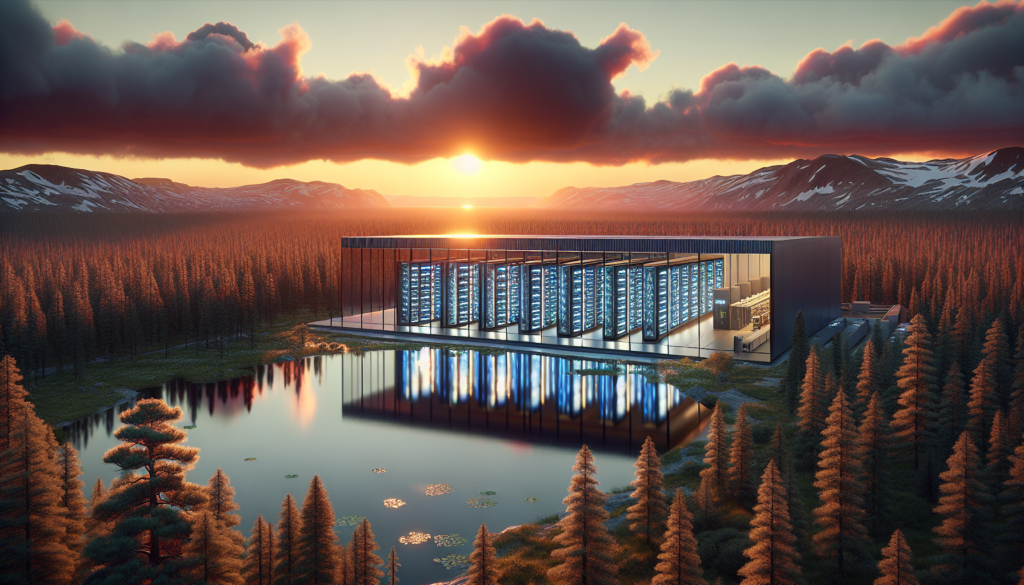
The fourth industrial revolution is often spoken of as just around the corner, but for those who look into the datacenters of the most forward-thinking Swedish companies in 2026, the revolution is already here. The term “AI Factory” has quickly emerged as the industry’s most used – and perhaps most misunderstood – term. But behind the marketing fog lies a fundamental shift in how we view data and computing power.
As Microsoft and Amazon invest hundreds of billions in “Project Rainier” and global infrastructure, they are not just building bigger data centers. They are building modern factories where the raw material is data and the end product is intelligence. For a Swedish manufacturer or a medtech company, this means that you have to stop seeing AI as an isolated software project and start seeing it as an integral part of the production line.
The factory that is not a building, but a process
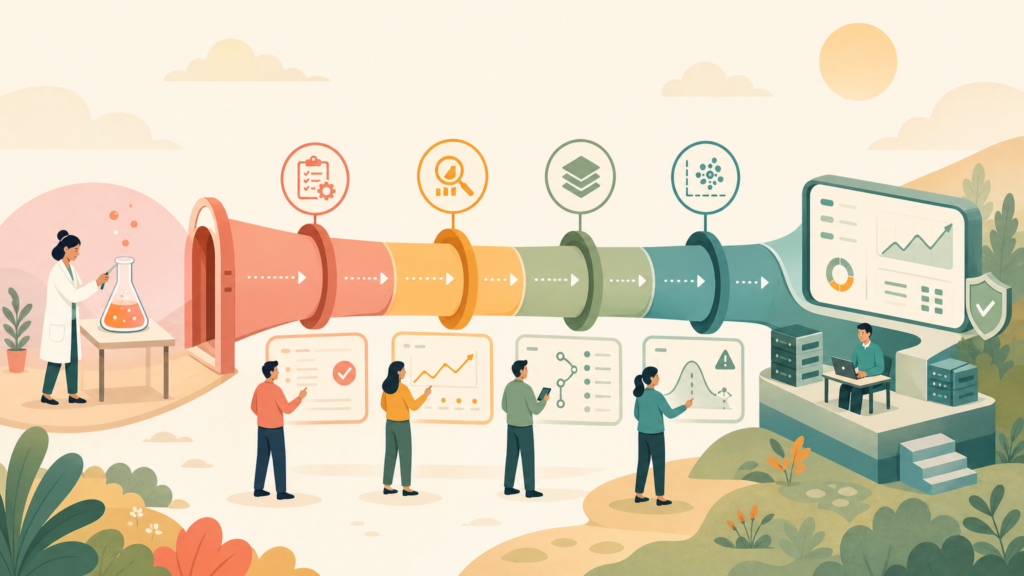
What confuses many is that an AI factory is not necessarily a physical place with concrete walls. Rather, it is a highly automated architecture for producing, refining and deploying AI models at scale. To understand what this means for the Swedish market, we need to look at the different levels of maturity that are now emerging.
The hyperscaler factory: At the top of the pyramid we find the global cloud giants. Their factories are optimized to train gigantic basic models with billions of parameters. That’s impressive, but for a Swedish industrial company, this is often a step too far.
The corporate AI factory: the real strategic battle is here. It’s about owning your own sovereign environment where you can train models on proprietary data without the risk of leaking sensitive information or being locked into an unhealthy dependency on a foreign cloud provider.
The Edge factory: For a hospital in Uppsala analyzing X-rays, or a factory in Trollhättan checking the quality of welds in real time, milliseconds are the difference between success and failure. The computational power must be right where the decisions are made.
Sweden’s unique conditions
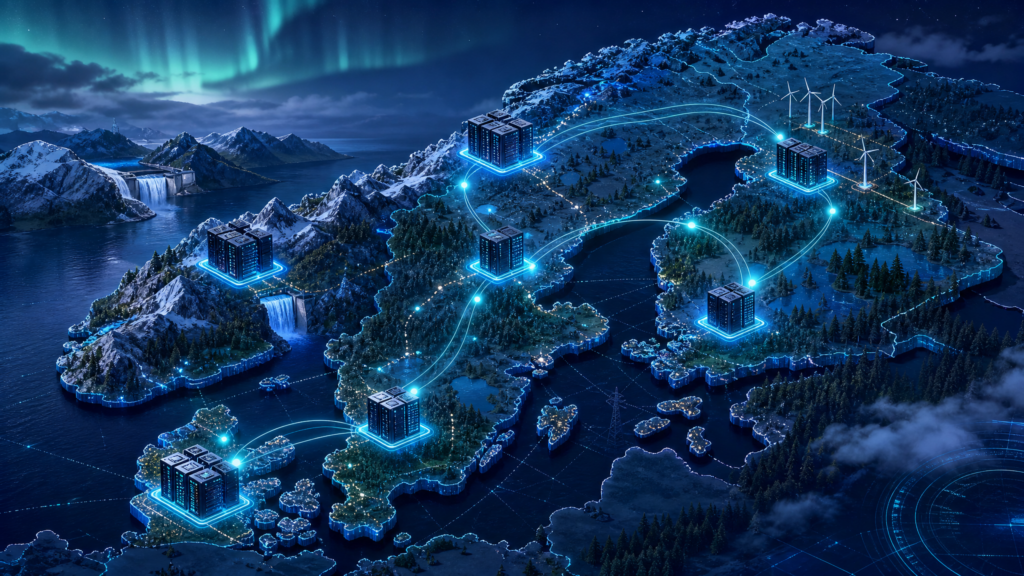
In Sweden, we often point to our access to renewable energy and our cool climate as our main competitive advantages for data centers. And it’s true – AI factories require huge amounts of energy, and our ability to deliver green electricity makes us an attractive location for these investments.
But in 2026, the playing field has become more complex:
- Network latency: The one we previously accepted to major European hubs is becoming a bottleneck for real-time applications
- EU AI Act & data sovereignty: Created an urgent need for local alternatives – not just performance, but legal certainty
- IP protection: If your most valuable IP – your trained models – ends up in an environment where the supplier can change the terms, you’ve built on shaky ground
The architecture behind the scenes
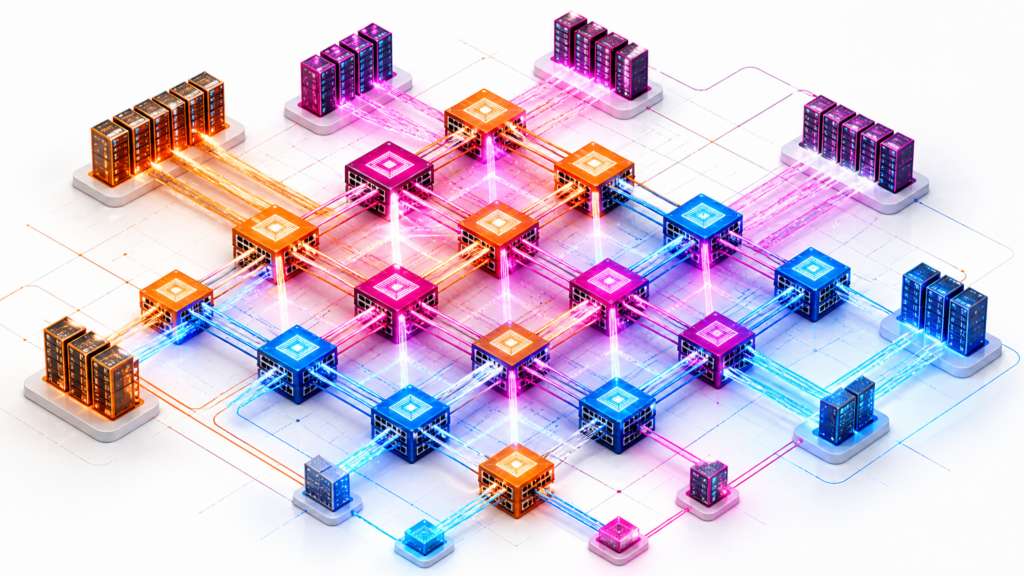
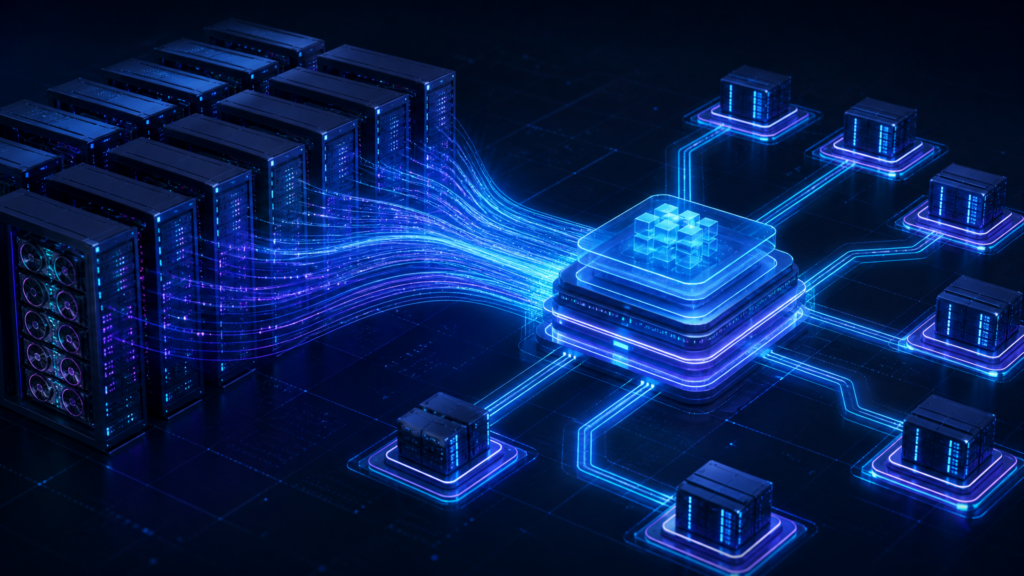
A common misconception is that an AI factory is just about buying as many powerful GPU cards as possible. The reality is that AI is very much a network sport. In a traditional server environment, the processor is often the limit, but in an AI factory, it’s how fast the data can move between GPUs and storage systems that determines productivity.
If the network topology is not optimized for the huge amounts of data, your expensive investments will spend more time waiting for data than actually performing calculations. At Aixia, we put a huge emphasis on just that: building network structures that eliminate bottlenecks.
Strategic choices before you put the shovel in the ground
Before investing in an AI factory, you need to ask yourself the hard questions that rarely fit into a sales pitch:
- What should we produce? Train your own models from scratch, or fine-tune existing ones with company data? The answer dictates the whole architecture.
- The human capital: An AI factory is not a machine that is started and forgotten; it is an operating organization that requires constant optimization.
- “The AI-ready trap: Many people build environments that are just regular server rooms with extra power. A true AI-optimized environment is built for the entire lifecycle.
The future is local, sovereign and practical
For the Swedish market, the AI Factory 2026 is about moving from experimentation to stable production. It is about realizing that sovereignty is not an obstacle to innovation, but a precondition for it. By building controllable and secure environments at home, Swedish companies can benefit from the AI revolution without sacrificing control.
At Aixia, we see that the most successful projects are those that dare to be practical. Those that start with the business case, build a robust infrastructure and then scale up as the results come. After all, an AI factory should do exactly what a traditional factory does: deliver measurable value, day in and day out, with the highest possible quality.
Are you ready to discuss what an AI factory would look like for your business?
Whether you are at an early strategic stage or need to optimize an existing environment, we at Aixia can help you build a superb and high-performance foundation on Swedish soil.
Read more about our AI solutions →
Petter Ahlén, Sales Manager Aixia AB