It’s easy to read the news of the Pentagon’s sevenfold increase in the AI budget as a military policy headline. But if you look a little closer at what the money is actually for, it’s more interesting than that.
It is not primarily about building more drones. It’s about decision-making capability – being able to process more information, faster, with fewer errors, under time pressure. Sensor fusion. Real-time analysis. Automated OSINT. Systems that give a commander a better situational awareness, not systems that replace the commander.
It’s a distinction that matters – because that’s exactly the kind of AI infrastructure that’s becoming available even outside the Pentagon.
Sweden is not a spectator here
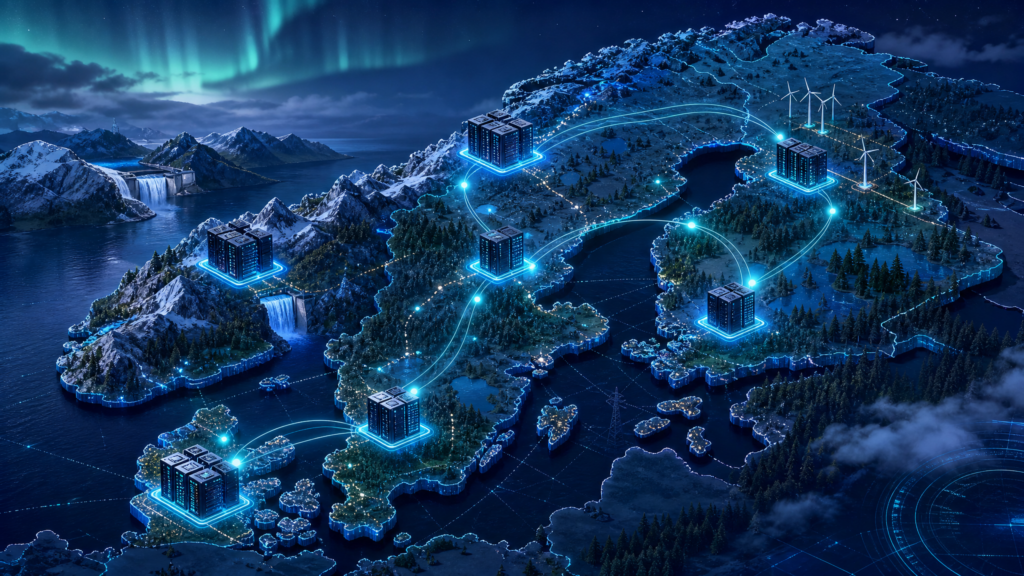
With NATO membership, FOI’s ongoing work and Saab’s investments in digitalization and autonomy, Sweden is actively engaged in this transformation. It is not a question of whether the defense sector will need to invest in AI infrastructure – that has already been decided. The question is who will build it, and on what terms.
And that’s where it gets interesting. For the Swedish defense industry – and the companies that supply it – there is a real difference between buying AI as a cloud service from an American hyperscaler and owning its own infrastructure with full control over data, hardware and encryption keys.
Sovereignty is not a buzzword in this industry. It is a requirement.
What it actually requires
Building AI systems for defense-related applications – predictive maintenance, situational awareness, cyber detection – is not a matter of plugging data into ChatGPT. It requires:
– Infrastructure in Swedish data centers, without third party exposure
– GPU capacity to train and run own models, on own terms
– MLOps platforms that provide control and reproducibility, not just an API key
– Partners who understand that “managed service” in this segment means a real security responsibility
It’s a very different conversation from “we help you with AI strategy”.
What we see from Aixia
In recent years, we’ve been working to build just that kind of infrastructure – secure AI environments, the AiQu platform for mission-critical workloads, and partnerships with hardware vendors that enable on-premise GPU capabilities in earnest.
Defence-related organizations and their subcontractors are starting to ask the right questions. We are ready to answer them.
If it’s a conversation you want, you know where to find us.